
Art classes and craft classes can both support creative development, but they usually do so in different ways. Art classes tend to place more emphasis on observation, experimentation, technique, visual thinking and developing individual ideas, while craft classes are often centred on making a specific object or learning a defined process.
Neither is automatically better. The right choice depends on what the learner enjoys, their age, confidence, and whether the aim is to develop broader artistic skills or focus on a particular practical activity. For many children and adults, a combination of both can provide the most rounded creative experience.
The Short Answer: Art And Craft Develop Different Creative Skills
If your priority is broad creative development, art classes will often provide more opportunities to make choices, experiment with materials, solve visual problems and develop an individual style.
Craft classes can be equally valuable, especially for building practical skills, patience, precision and confidence through completing a tangible project.
The key difference is usually not whether one activity is more creative than the other. It is how much freedom the learner has to explore ideas, make decisions and respond to the materials rather than simply follow a fixed set of steps.
What Is The Difference Between An Art Class And A Craft Class?
The distinction can be surprisingly blurred.
An art class might involve drawing, painting, ceramics, sculpture, printmaking or collage. The focus is often on learning a technique and then using it to interpret an idea in an individual way.
A craft class might involve activities such as jewellery making, paper craft, decorative sewing or creating a particular object. There may be a stronger focus on learning a process and producing a recognisable finished outcome.
However, good craft teaching can involve substantial creativity, while poorly structured art teaching can become just as prescriptive as following a template.
What matters most is the teaching approach.
A useful question to ask is:
“Will the learner be making their own creative decisions, or mainly recreating someone else’s example?”
That distinction can tell you more about the likely creative value of a class than whether it is labelled “art” or “craft”.

How Art Classes Can Support Creative Development
Creative development is not simply about learning how to draw accurately or produce an attractive finished piece. It also involves learning how to generate ideas, experiment, make decisions, respond to mistakes and develop personal ways of expressing those ideas.
Research into arts participation recognises activities such as painting and sculpture as forms of artistic and creative learning, while arts education research also links participation with wider social, emotional and educational outcomes. The strength and nature of those outcomes varies between studies, so art should not be treated as a guaranteed route to academic improvement.
A thoughtfully taught art class can support several parts of this process.
Experimenting With Different Materials
Using paint feels very different from working with clay. Drawing requires a different approach again from linocut, collage or sculpture.
Moving between media encourages learners to work out what each material can do rather than expecting every creative problem to have the same solution.
At Highgate Art School, our programmes can include painting, drawing, clay, ceramics, linocut, collage and both 2D and 3D work. This variety gives learners opportunities to experience different ways of making and thinking.
Developing Ideas Rather Than Following Templates
Creative confidence grows when students realise there can be more than one successful answer to the same project.
For example, a class might introduce a particular artist, technique or theme. Students can then use that starting point differently rather than being expected to produce identical pieces.
That shift from “What am I supposed to make?” to “What do I want to do with this idea?” is an important part of creative development.
Learning Through Mistakes
One of the most valuable parts of making art is discovering that an unexpected mark, difficult material or failed first attempt does not necessarily mean the project has gone wrong.
Students can adapt, repaint, reshape, rethink or begin again.
Learning how to respond constructively when something does not work is part of developing independence as a maker.
Building Technical Skills Over Time
Creative freedom is useful, but technique matters too.
Understanding colour mixing, observational drawing, composition, clay construction or printmaking gives students a larger vocabulary with which to express their ideas.
Effective art teaching therefore combines experimentation with genuine skill development rather than treating the two as opposites.
The National Endowment for the Arts describes comprehensive arts education as combining hands-on creation with skills development and broader engagement with artistic ideas.
What Craft Classes Can Offer
Craft classes have their own strengths and should not be dismissed as less creative.
A well-designed craft activity can help a learner understand materials, practise hand skills and experience the satisfaction of taking a project from beginning to end.
Learning A Clear Process
Some learners thrive when a project has a visible sequence.
There can be something reassuring about learning how to prepare materials, follow a particular technique and gradually see the object take shape.
This structure can make creative activities feel more accessible, particularly for someone who feels intimidated by an entirely blank page.
Developing Precision And Patience
Craft projects often require repetition, careful assembly and attention to detail.
These can be valuable skills in their own right.
A learner might discover that creativity is not always spontaneous. Sometimes it involves slowing down, practising a technique and making small adjustments until an idea works.
Creating Something Tangible
Completing an object can give children and adults an immediate sense of achievement.
That matters, particularly for beginners.
A successful first experience can encourage someone to become more adventurous later.
When Craft Classes Can Become Too Restrictive
The limitation comes when every student is expected to produce the same result in exactly the same way.
Imagine a group of children being shown an example and then being told which colours to use, where every shape should go and what the finished piece should look like.
They may practise valuable motor and practical skills, but there is relatively little opportunity for independent creative thinking.
A more open version of the same project might teach the technique first and then allow each child to choose colours, forms, composition or subject matter.
The difference is subtle, but important.
The strongest creative sessions give learners enough structure to succeed without deciding everything on their behalf.
Art Classes vs Craft Classes For Children
For children, the question is often less about choosing art or craft and more about choosing the right learning environment.
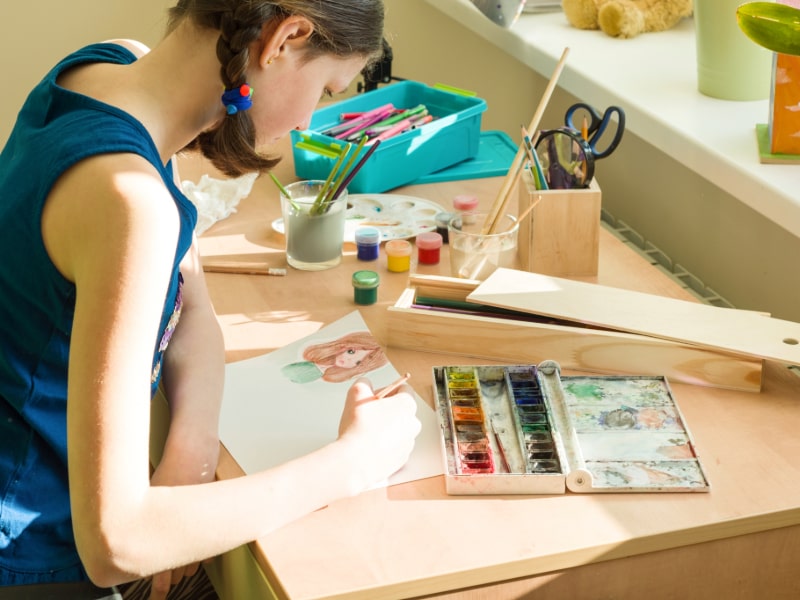
A useful children’s creative class should ideally offer a balance of:
- practical instruction
- age-appropriate materials
- opportunities to make choices
- experimentation without pressure
- enough guidance to avoid frustration
- encouragement without taking over the work
Young children may particularly benefit from being able to explore materials freely. As they develop, structured projects can introduce more sophisticated techniques while still leaving room for individual interpretation.
Research summarised by the National Endowment for the Arts has found associations between children’s participation in arts experiences and a range of social-emotional and educational outcomes, although these relationships are complex and should not be interpreted as proof that art classes alone cause those outcomes.
At Highgate Art School, our children’s art classes use hands-on projects across different materials, with professional guidance and opportunities for students to develop their own ideas.
What About Adults?
Adults often approach creative classes for very different reasons.
Some want to become technically stronger. Others want a regular creative outlet after work, return to something they enjoyed when they were younger or try something completely unfamiliar.
For an adult who wants to develop broader artistic confidence, an art course that combines technical teaching with individual experimentation may be particularly useful.
Someone primarily interested in mastering a particular making process may prefer a more specialised craft-style course.
There is no need to choose one permanently.
An adult might begin with ceramics, move into life drawing and later experiment with printmaking. Each discipline develops slightly different ways of observing, making decisions and handling materials.
Our adult art classes have included disciplines such as painting, ceramics, life drawing, linocut, collage and creative clay.
Which Is Better If You Want To Build Artistic Skills?
Art classes are generally the stronger choice if the goal is to develop skills that can transfer between different forms of visual art.
For example, learning observation, composition, colour relationships and visual decision-making can inform painting, drawing, printmaking and other disciplines.
Craft classes may develop highly valuable skills too, but these can sometimes be more closely tied to one technique or object-making process.
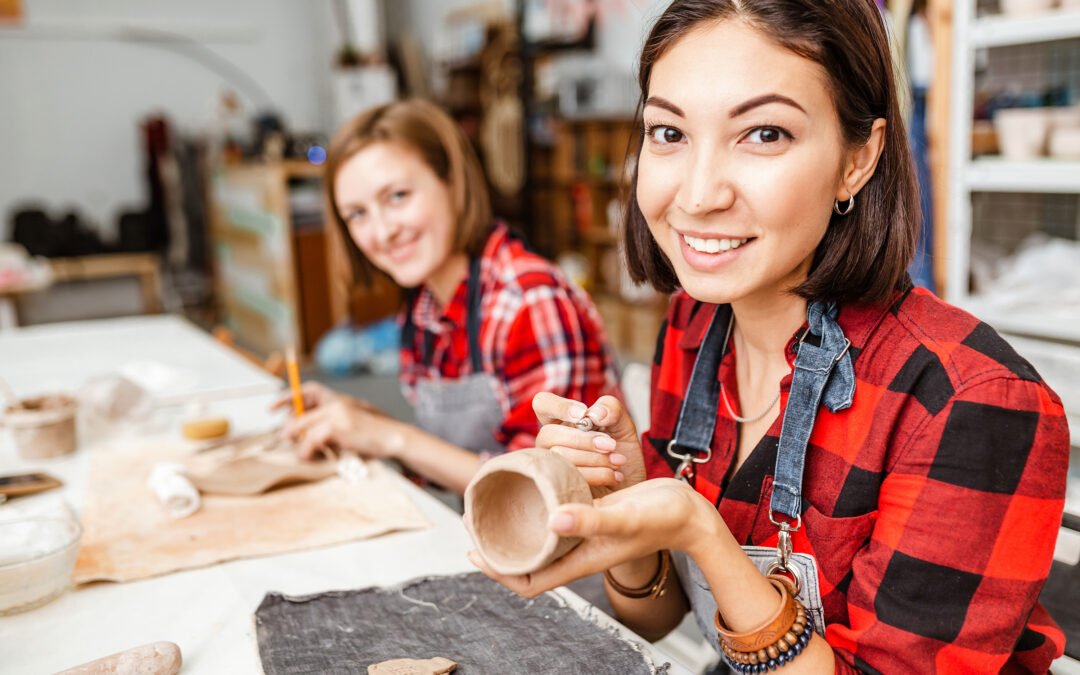
This does not mean that specialist making is limiting. Ceramics is a good example. It can involve elements of both art and craft, combining technical processes such as hand building and glazing with decisions about form, surface, colour and personal expression.
The labels matter less than what actually happens in the class.
How To Choose A Creative Class
Before enrolling yourself or your child, look beyond the class title.
Consider these questions:
- Are students taught real techniques?
- Is there room for personal interpretation?
- Are different materials introduced?
- Does the teacher demonstrate without expecting everyone to copy?
- Is the class appropriate for the learner’s age and experience?
- Can students ask questions and receive individual guidance?
- Does the activity encourage experimentation as well as producing a finished result?
Small-group teaching can also be useful because it gives tutors more opportunities to see how each student is approaching a task and adjust their guidance accordingly.
At Highgate Art School, our approach is based around professional artist teaching, hands-on learning and small groups that allow for more individual support.
So, Should You Choose Art Classes Or Craft Classes?
Choose based on the kind of creative experience you want rather than the label.
Craft classes can be excellent for learning a defined process, improving practical skills and gaining confidence through making something tangible.
Art classes may be more suitable when you want broader creative development, greater experimentation and opportunities to develop your own ideas and artistic voice.
For many learners, the ideal answer is not one or the other.
A varied creative education can include drawing one week, clay another, printmaking later and carefully structured craft projects along the way. What matters is that students are not simply being told what to make. They should also be learning how to think, experiment and make creative choices for themselves.
Frequently Asked Questions
Are Craft Classes Good For Creativity?
Yes. Craft classes can support creativity when learners are given opportunities to choose, adapt and experiment rather than simply copy a fixed example. They can also develop practical skills, patience and confidence with materials.
Are Art Classes Better Than Craft Classes For Children?
Not necessarily. The quality and teaching style of the session matter more than its label. Art classes may offer broader opportunities for experimentation, while craft activities can provide useful structure and practical skill development.
Can Art Classes Help A Child Become More Confident Creatively?
They can provide an environment in which children practise making decisions, experimenting and developing ideas without needing one predetermined correct answer. Individual experiences vary, and creative confidence develops over time.
Is Ceramics Art Or Craft?
It can be both. Ceramics involves technical craft skills such as forming, constructing and glazing clay, but it can also involve highly individual decisions about form, texture, surface and artistic expression.
Do Beginners Need To Choose A Craft Class First?
No. Beginners can start with either art or craft. A well-taught beginner art class should provide enough structure and technical guidance for someone with no previous experience.
Find The Creative Approach That Suits You
The best creative class is one that offers enough guidance to help you progress while leaving enough freedom to experiment and develop your own ideas.
At Highgate Art School, we teach children and adults through a range of artistic disciplines rather than limiting creative development to one medium. If you are deciding what might suit you or your child, explore our children’s art classes, adult art classes, or contact our team to find out more about current programmes.